
LiveScope vs ActiveTarget vs MEGA Live: Which Live Sonar Should You Buy in 2026?
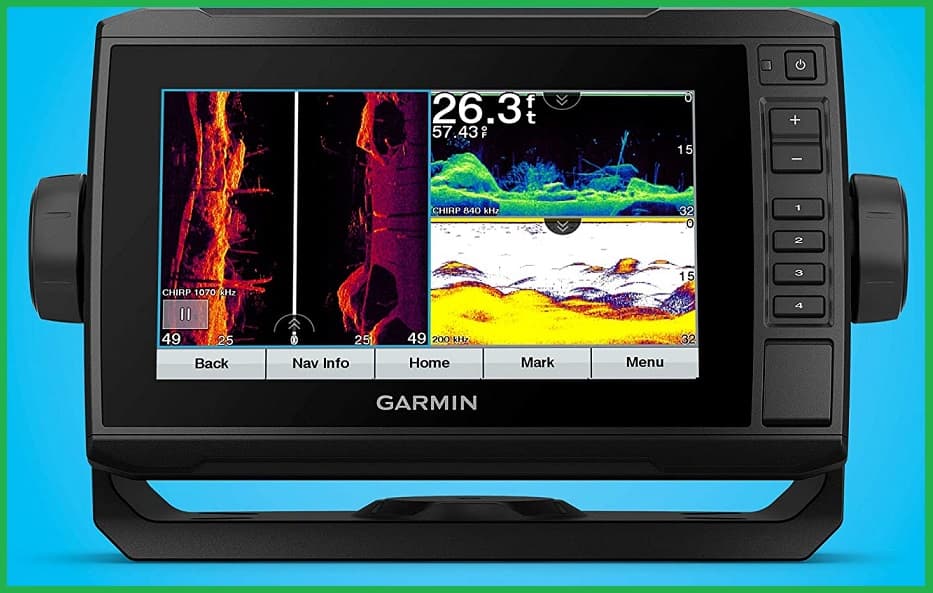
Forward-facing sonar — often called live sonar — is the biggest change to fish finding in a decade. Instead of showing you a scrolling history of what you've already driven over, it shows you fish and structure in front of the boat, in real time, moving as they move. You can watch a fish approach your lure and react.
Three systems dominate: Garmin LiveScope, Lowrance ActiveTarget, and Humminbird MEGA Live. They all do the same core job. The differences that actually matter to a buyer are narrower than the marketing suggests — and the biggest factor in your decision probably isn't image quality at all.
Here's the honest version.
Not sure your display supports live sonar? Check it in 10 seconds with our fish finder compatibility checker before you shortlist anything — it rules out the expensive mistakes first.
Quick comparison
| Model | Best for | Typical price | |
|---|---|---|---|
| Garmin LiveScope Plus System with GLS 10 and LVS34 TransducerGarmin | The category benchmark. Sharpest image, biggest ecosystem. | $1,300–1,500 | Check Price |
| Lowrance ActiveTarget 2 Live Sonar TransducerLowrance | Highest stated resolution; strong pick if you already run Lowrance. | $1,300–1,500 | Check Price |
| Humminbird MEGA Live 2 Forward-Facing Sonar TransducerHumminbird | For XPLORE, APEX and SOLIX G3 only — not HELIX or older SOLIX. | $1,300–1,600 | Check Price |
The single most important thing to understand first
The transducer is not the whole purchase.
Every one of these systems is a transducer plus black box that must connect to a compatible chartplotter/display from the same brand. There is no cross-compatibility. You cannot run LiveScope on a Humminbird head unit, or MEGA Live on a Lowrance.
So the real question is rarely "which live sonar is sharpest?" It's:
What display do I already own, and what will the complete working system cost me?
A realistic full setup includes:
- The live sonar system itself — roughly $1,300–1,600
- A compatible display, if you don't already have one — commonly $700–1,500 for a screen large enough to be worth it
- A dedicated 12V power source — most anglers add a separate lithium battery, since these units draw meaningfully more than a traditional sonar
- A mount — usually a trolling motor barrel mount or a dedicated live sonar pole so you can rotate the transducer independently
It is completely normal for a first-time live sonar setup to land between $2,500 and $4,000 all-in. If a deal looks like it's only $1,300, check carefully whether a display is included.
This is why brand loyalty dominates this category. If you already run a modern Garmin, Lowrance or Humminbird unit, staying in that ecosystem usually saves you four figures — and that saving outweighs the modest image-quality differences between the three.
Garmin LiveScope Plus (LVS34)
Garmin got here first — LiveScope launched in 2018, several years ahead of the competition — and that head start still shows in ecosystem maturity, community knowledge, and the sheer number of anglers who can help you tune it.
Strengths
- Widely regarded as the benchmark for target separation — distinguishing two fish close together, or a fish sitting tight to cover
- Particularly strong in shallow water, where cone angle and noise rejection get difficult
- Largest install base, which means the most tutorials, settings guides and secondhand availability
- Beam coverage of roughly 20° x 135°, giving a tall usable window in forward mode
Trade-offs
- Requires a compatible Garmin display (the ECHOMAP UHD2 series and above are the common pairing)
- Premium pricing, and Garmin discounts less aggressively than competitors
Best for: anglers already in the Garmin ecosystem, and anyone who fishes shallow water or heavy cover where target separation matters most.
If you need the display too, the ECHOMAP UHD series is the usual pairing:
Lowrance ActiveTarget 2
ActiveTarget 2 is Lowrance's second-generation live sonar, and it closed most of the gap that existed with the first version.
Strengths
- Highest stated resolution of the three on paper
- Same 200 ft range class as LiveScope
- Natural choice if you run Lowrance HDS — Lowrance's down-scan imaging is excellent, so a Lowrance boat gets a genuinely strong all-round package
- Lowrance runs promotional pricing more often than Garmin, so real-world cost can come in lower
Trade-offs
- Several anglers report LiveScope still edges it in very shallow water and in scout mode
- Requires a compatible Lowrance display
Best for: existing Lowrance owners, and buyers who want flagship-class live sonar but are price-sensitive and willing to watch for promotions.
Humminbird MEGA Live 2
MEGA Live 2 is Humminbird's answer, and it's a real improvement on the original MEGA Live.
Strengths
- Wider cone than LiveScope — fish enter the picture earlier and stay visible longer, which some anglers strongly prefer for tracking movement
- Image quality generally placed between Garmin's older LVS32 and current LVS34
- Pairs with Humminbird's outstanding MEGA Side Imaging, which is arguably the best side imaging available
Trade-offs
- Shorter maximum range — around 150 ft, versus roughly 200 ft for the other two. For most freshwater fishing this is irrelevant; for deep-water work it may not be
- Compatibility is much narrower than people assume — see the warning below
Check your display before you buy. MEGA Live 2 works only with XPLORE, APEX and SOLIX G3 units. It is not compatible with HELIX, and not compatible with older SOLIX G1 or G2 units.
This is the most expensive mistake available in this category. If you run a HELIX — one of the most popular fish finders Humminbird has ever sold — MEGA Live 2 will not work with it, and you would need to replace your display as well. Budget accordingly, or look at the original MEGA Live instead.
Best for: anglers already running an XPLORE, APEX or SOLIX G3, who value a wider field of view and rely on MEGA Side Imaging.
So which one should you actually buy?
Be honest about which situation you're in:
You already own a modern Garmin, Lowrance or Humminbird display. Buy that brand's live sonar — but confirm your exact model is supported first, because "same brand" does not guarantee compatibility. Humminbird HELIX owners in particular cannot run MEGA Live 2. Where your display is supported, the image-quality differences between these three are small enough that they don't justify replacing a working unit, and staying put typically saves $700–1,500.
You're starting from nothing and money is no object. Garmin LiveScope Plus. It has the deepest ecosystem, the strongest shallow-water reputation, and the best resale value.
You're starting from nothing and value matters. Compare complete bundle prices — display plus live sonar together — from all three brands before deciding. Lowrance and Humminbird bundles frequently undercut Garmin, and the gap in on-water performance is smaller than the gap in price.
You mostly fish deep water. Favour LiveScope or ActiveTarget for the longer usable range.
You mostly fish shallow, or heavy cover. LiveScope's target separation reputation is well earned here.
Is live sonar worth it at all?
For most casual anglers, honestly: no.
If you fish a handful of weekends a year, $2,500–4,000 buys an enormous amount of other fishing. A good $400–700 CHIRP and down-imaging combo will find fish perfectly well.
Live sonar makes clear sense if you're:
- Fishing competitively, where locating and targeting individual fish is the whole game
- On the water very frequently
- Targeting suspended fish — crappie, and open-water bass especially — where watching a lure relative to a fish changes your catch rate dramatically
It's a genuinely transformative tool for the anglers it suits, and an expensive novelty for everyone else. There's no shame in the latter — just go in with clear eyes.
If you're not sure, our Portable Fish Finders Buying Guide covers the far more affordable end of the market.
Frequently asked questions
Can I run LiveScope on a Lowrance or Humminbird unit? No. Each live sonar system only works with compatible displays from the same brand. There is no cross-brand compatibility.
Do I need a separate battery? Most anglers add one. Live sonar draws considerably more power than traditional sonar, and running it off your main starting battery risks leaving you stranded. A dedicated lithium battery is the standard solution.
Can I use live sonar from a kayak? Yes, and it's increasingly common — but it requires careful planning around mounting, battery capacity and total weight. Expect the setup to cost more than the kayak for many anglers. Our kayak fish finder guide covers more practical options.
Will these work through ice? All three brands offer ice-fishing configurations or bundles, though specifics vary by model and season. Confirm the exact bundle contents before buying — see our ice fishing fish finder guide for dedicated ice options.
Is the older LiveScope LVS32 still worth buying used? It can be good value. The LVS34 improves target separation and shallow-water performance, but an LVS32 at the right price still massively outperforms having no live sonar at all.
Keep Reading
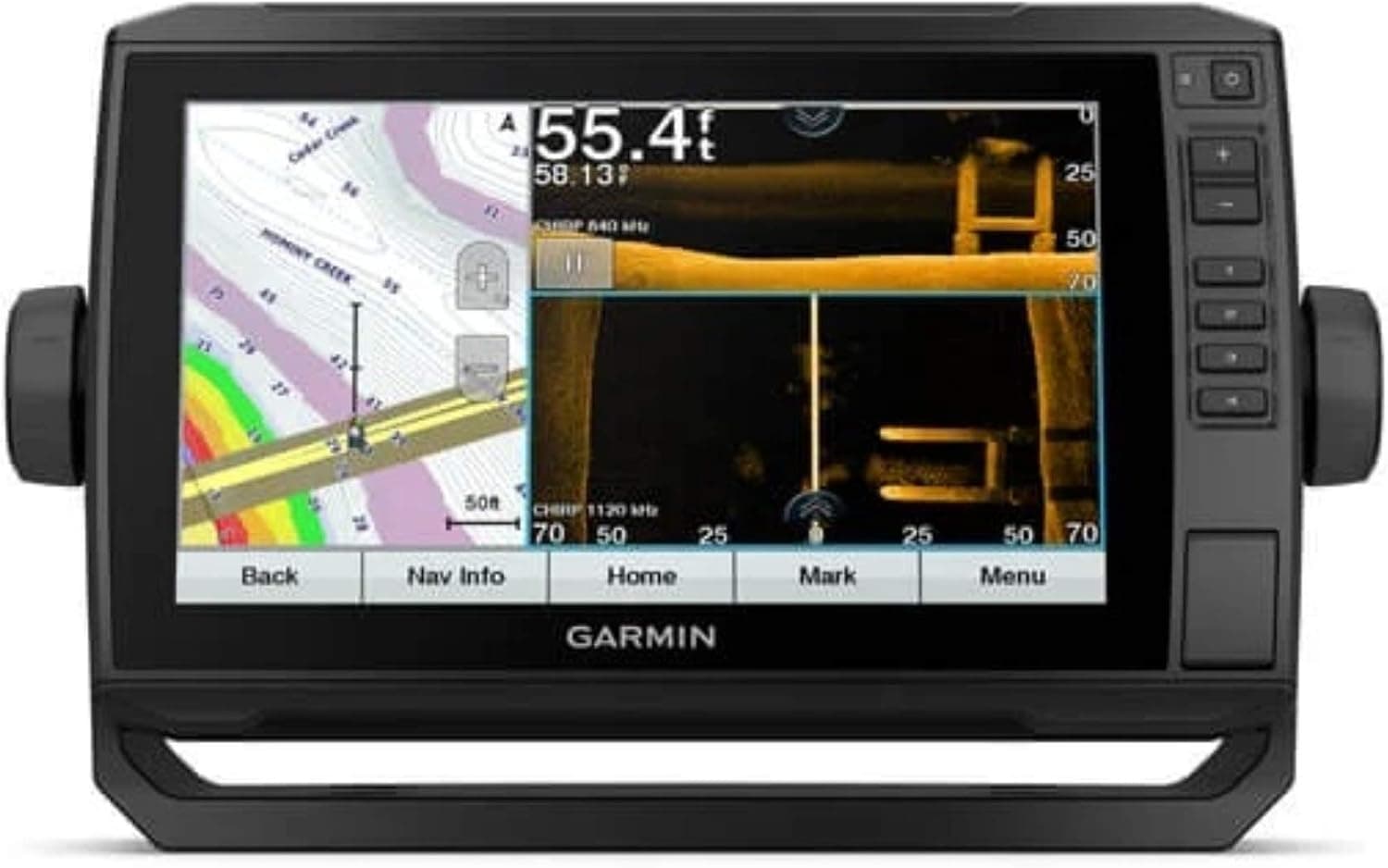
Best Garmin Fish Finder review 2026 - Best Portable Fish Finders
You will see the different Garmin fish finder brand in the market. Some of them are not good. We have searched for best garmin fish finders.
Read More →
Best Portable Lowrance Fish Finder Review – Which one to Buy
Lowrance is a brand which is making lowrance fish finder to help fishers catch the fishes without any difficulty. But which one you should..
Read More →
Humminbird Fish Finder Review – Which One to Buy?
If you are buying a humminbird fish finder, then you must read this article before buying it. We will tell you if you should buy it or not?
Read More →